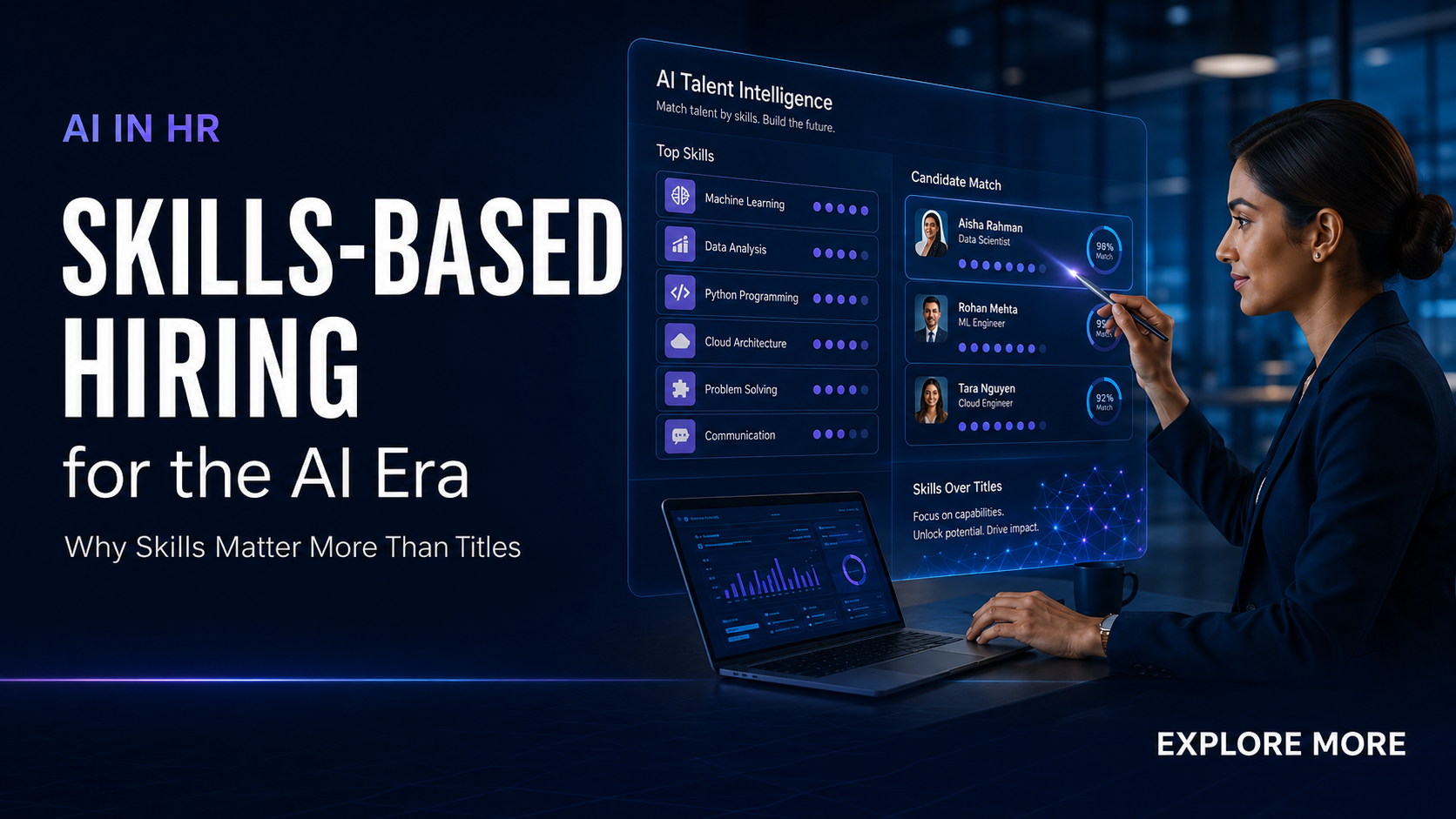
Skills-based hiring has moved from progressive idea to operational necessity. LinkedIn estimates that 70% of the skills used in most jobs will change by 2030, while the World Economic Forum says nearly 40% of core skills are set to shift. In that world, exact-match hiring becomes slower, narrower, and less predictive. Gartner’s 2025 evidence that “hire for promise” outperforms “hire for proficiency” provides the hardest commercial proof.
Why Job Descriptions Are Underperforming
Many job descriptions still describe yesterday’s work. They overweight tools, years of experience, and pedigree while underweighting learnability, problem framing, and outcomes. Deloitte’s 2025 work on the experience gap also highlights the problem from another angle: organizations want experience even as workers struggle to get the foothold opportunities that build it.
The cost is obvious in hard-to-fill roles. Buyers say talent is scarce, but often what is scarce is the narrow profile they insisted on. Skills-based hiring helps leaders redesign the brief toward the work that actually needs to be done.
What to Change in Practice
Start by breaking the role into missions, capabilities, and evidence. Ask which skills must be present on day one, which can be learned in 90 days, and which are proxies for something more useful. Then build scorecards around the evidence of skill, not only job-title history.
This is particularly important for AI-era roles that blend technical and business work. IBM found that 54% of CEOs are hiring for AI roles that did not exist a year earlier, while nearly one-third of the workforce may require retraining or reskilling over the next three years. If the market is creating new roles faster than legacy career paths can catch up, hiring for adjacent skills becomes a strategic advantage.
How to Hire for Promise Without Lowering Standards
Hiring for promise is not guesswork. It is evidence-based potential. That means structured interviews, work samples, capability-based case questions, and manager alignment on what “good enough to learn” actually means. It should also be paired with onboarding plans and skill-building support.
For SEO and AEO, this article should explicitly answer commercial buyer objections: Will quality drop? Will managers accept it? How do we measure success? The answer is that quality usually improves when companies stop rejecting capable people for static resume gaps and instead define what success in the role truly requires.
What Leaders Should Do Next
Audit your ten hardest-to-fill roles. For each one, remove non-essential criteria, define adjacent-skill feeder profiles, and rebuild selection around work-relevant evidence. Then link hiring to internal mobility and learning so your talent strategy does not stop at offer stage.
The next step is partnering with recruitment and advisory specialists who can help design and implement a skills-first hiring strategy aligned with business goals. InTalent Asia can support organizations in building scalable, evidence-based hiring frameworks that improve both hiring speed and workforce adaptability.
FAQ
What is skills-based hiring?
It is a hiring approach that prioritizes demonstrated capabilities and adjacent potential over rigid degree, pedigree, or title filters.
Is hiring for promise risky?
It can be if done loosely. Gartner’s point is that it works better when organizations define the right evidence and provide development support.
Why is this more important now?
Because skills are changing quickly and many emerging roles do not yet have stable talent pipelines.
References
- LinkedIn, “Work Change Report: AI Is Coming to Work.”
- World Economic Forum, “Future of Jobs Report 2025.”
- Gartner, “Closing Skills Gaps at Scale.”
- IBM, “CEO Study: CEOs Double Down on AI.”
- Deloitte, “Closing the Experience Gap.”